
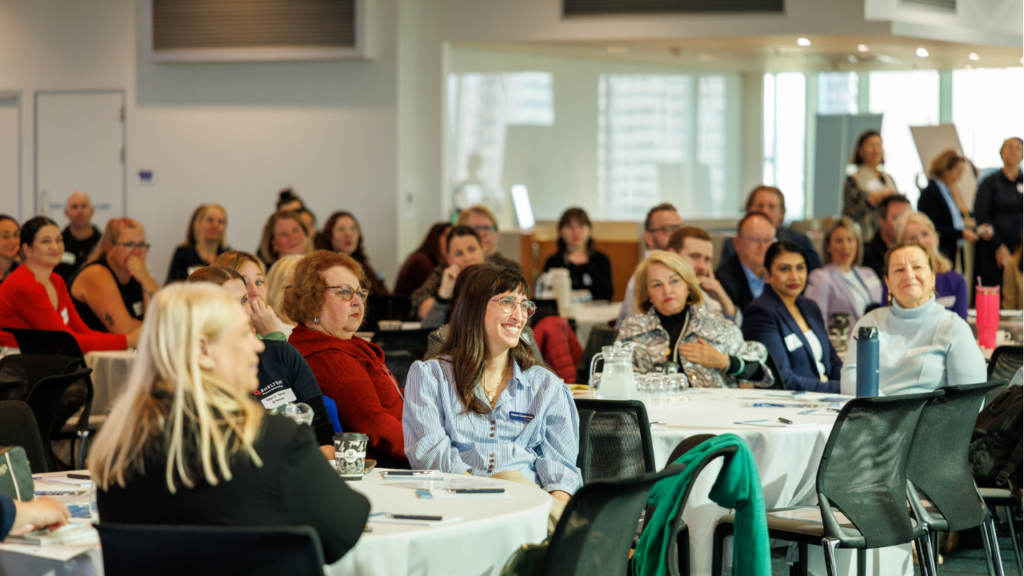
Five key themes emerged from a day of candid conversations about how the housing and homelessness sector can work better together.
When the housing and homelessness system works well, people receive support that’s connected, responsive and shaped around their needs.
When it doesn’t, they can find themselves moving between services, repeating their story and falling through gaps no single organisation can fix alone.
The Lady Musgrave Trust’s 18th Annual Forum on Women and Homelessness put that challenge under the microscope, asking what meaningful collaboration really looks like and what it will take to make more of it possible.
Held at QUT Gardens Point in Brisbane on 6 August 2026, this year’s Forum centred on the theme Stronger Together or Smarter Apart: Collaboration, competition and the choices that shape our sector.
It brought together service leaders, practitioners, government representatives, community organisations and people with lived experience to examine the forces that support collaboration, the pressures that undermine it and what the sector can do differently.
For the first time, the Forum ran as a full-day program, with participants seated around tables rather than in rows to create more space for deeper conversation, practical learning and shared problem-solving.
Across three panel discussions, a project showcase and a hands-on workshop, participants were encouraged to challenge existing approaches, share what they were seeing across the system and identify practical commitments they could take forward.
Five key threads ran through the day.
Put lived experience at the centre
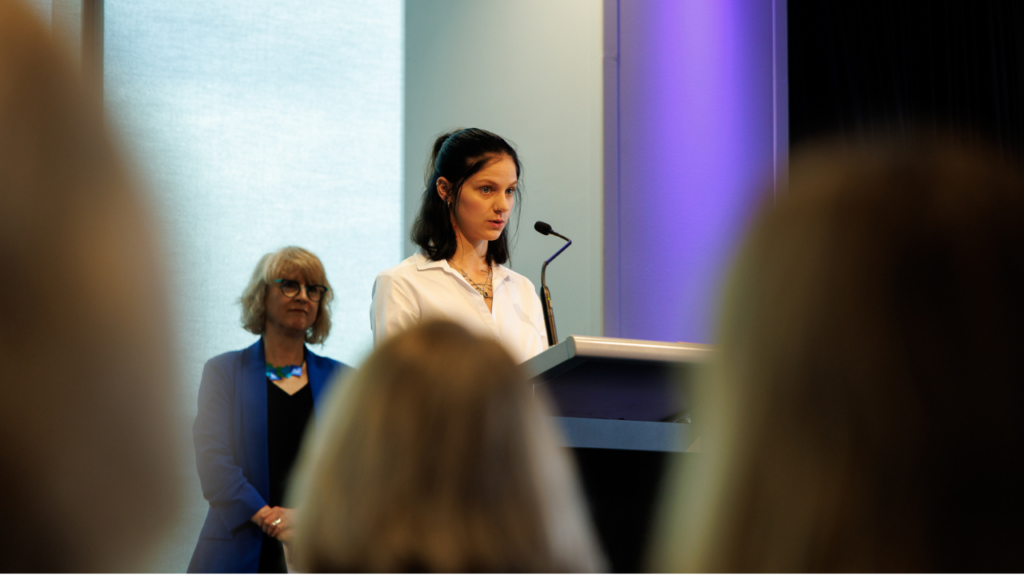
The Forum’s opening reading, delivered by a young mother, Micky, traced a direct line from a childhood spent watching domestic abuse to her determination to build something different for her son.
“I grew up believing abuse wasn’t really abuse unless it was a closed fist, or you ended up in hospital,” she told the Forum.
Micky’s turning point came with her son. “I want to create a beautiful sanctuary for my son and me, and for the generations after us,” she said. “I want to stop the intergenerational trauma here. I want to break the cycle.”
Micky and her son moved into transitional supported accommodation in Ipswich in 2025. With this support, they were able to start rebuilding their lives, and Micky regained her confidence and sense of self-worth.
Micky’s story helped anchor the day in lived experience, bringing conversations back to people’s real needs and aspirations.
The importance of giving women experiencing homelessness a voice, rather than simply managing or pitying them, was echoed through the day. Speaking from her own experience of housing insecurity, panellist Candace Staun said she’d stopped describing herself as homeless altogether.
“People hear ‘homeless’ and they just feel pity,” she said. “They say, ‘I’m so sorry for you,’ and I never felt that way. So I decided to say I’m ‘home-free.’”
Candace encouraged the room to go further than sympathy: “We need to find ways to encourage people to stand in their own power and feel positive about what’s happening for them.”
In a discussion on How the system shapes behaviour and where it breaks collaboration, Dr Ellenah Mackie, General Manager of Sector Services at the Department of Housing and Public Works, clarified that the point of putting lived experience at the centre isn’t to hand the people with that experience the job of fixing the system.
“It’s not their responsibility to fix a service system they’ve had to survive,” she said. “It’s up to all of us to build a system that reflects both the aspirations of people with lived experience and the evidence of what works.”
The system is failing those who need it most
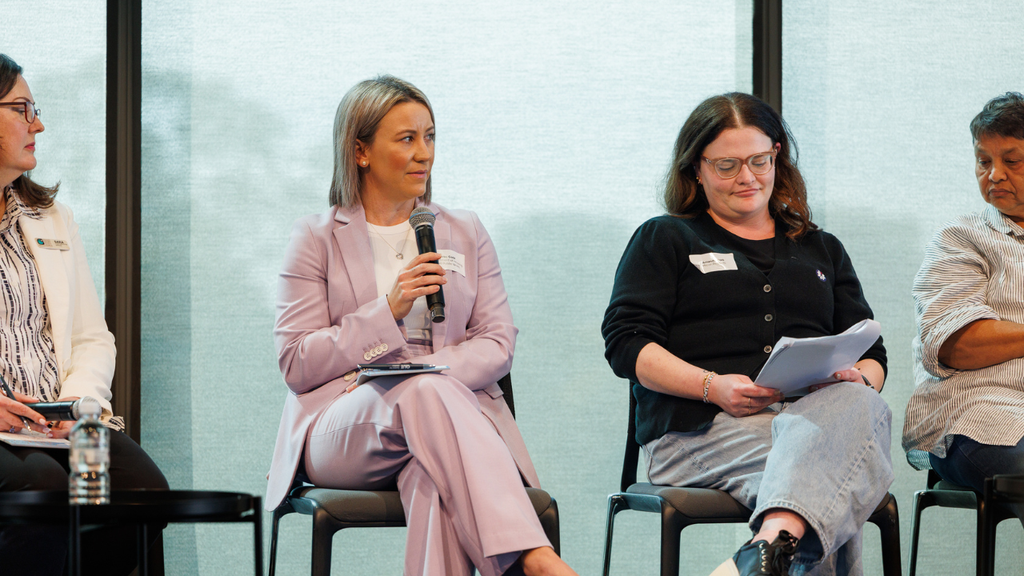
In the case study session, The system in the dock: A live scenario for collaboration, the room heard the story of a family of seven who lost their rental property, couldn’t find a house large enough under a rigid bedroom-count policy, and were forced to live in a tent in a public park.
Panellists agreed that the system had failed the family well before they became homeless.
“This was a family who had a home,” said Kirby Cook, General Manager of Frontline Services at the Department of Housing and Public Works. “Our job really should have been to keep them in that home, and wrap the right services around their situation.”
The case highlighted a structural gap causing major delays across the system. Event attendee Kathleen, a former frontline worker, said: “Housing workers can identify quite quickly that something’s going wrong, but the funding is limited, and there’s so little access to other services. So we’re talking three or four months down the track before support services are able to step up.”
The case also showed what happens when services do not have a shared picture of a person’s circumstances. Even though the services were in contact, a lack of communication and collaboration meant meaningful, timely support was never provided.
Collaboration has to go beyond coordination
The Forum’s second panel, Beyond good intentions: The partnership puzzle, explored what it takes to move from simply coordinating services to creating a genuinely connected system.
“When services are truly collaborating, instead of feeling like you’re going point to point between different services, it feels like a safety net when you’re in need,” said Youth Ambassador Caitlyn Wheatley.
“Instead of going to one place and being told, ‘You’re not eligible,’ they collaborate with other organisations to get you the right support.”
Rebecca Hinton, Practice Lead for Service Integration, Brisbane and Ipswich at Q Shelter, explained that integration is about people experiencing one connected system, where services listen to people’s needs and actively communicate with each other.
“People experiencing homelessness are the experts in their own lives, not us,” she said. “We’re just here to guide and support them. But how do we do that if we can’t work together? Together, we’re better.”
Fabian Webber, Program Development Manager at Roseberry Queensland and Community Lead at CQ Zero, said building relationships across the sector is even harder in regional areas.
“Central Queensland has traditionally been very siloed, with services not talking or working together due to a ‘This is my patch’ mindset,” he said.
His message was to treat collaboration as a must-have, rather than a nice-to-have: “Usually, when times are tough and we’re all busy, collaboration is the first thing we ditch. Make it the last thing you ditch. Individually, we can do a little. Together, we can do anything.”
Share what works. And what doesn’t.
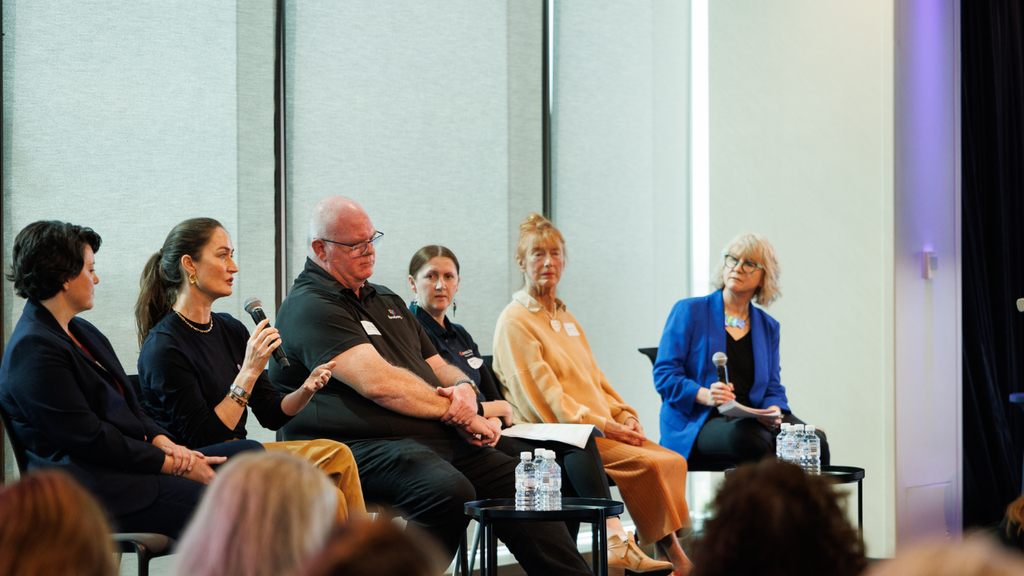
The day’s conversations also highlighted the need for greater openness across the sector.
Victoria Parker, CEO of The Lady Musgrave Trust, spoke about the importance of sharing learnings more broadly.
“If we find something that works, we shouldn’t protect it – we should generously make it available,” she said. “Because we’re not just here to do a job. We’re here to solve problems and make our community stronger.”
She added that the task of improving communication is only getting more urgent: “There’s less money available, and there’s more need.”
Madeleine Belfrage, Senior Consultant at ARTD, noted that genuine evaluation shouldn’t be limited to spreadsheets and statistics. “A lot of what I’d call the ‘secret sauce’ of partnership isn’t numeric,” she said. “It’s about relationships, at all levels.”
With this in mind, Madeleine encouraged practitioners to be brave about sharing failures as well as the successes.
“When reviewing your own work, you need to be able to say: ‘This is all the good stuff, and this is the bit that doesn’t work. We’re going to take it on board and share it widely, so everyone can benefit from what we’ve learned.’”
Turning hope into action
Victoria acknowledged that the road ahead won’t be easy and that the work is already taking a toll. But she also recognised that the Forum’s strong turnout was a sign of motivation within the sector.
“If you’re feeling fatigue, resentment or frustration, or if you’re feeling energised and want to share that energy, we want to bring all of that into the room,” she said. “Because there’s so much we can achieve if we do things a little differently, take accountability when things don’t work, and share success across the whole sector.”
Dr Ingrid Burkett, Co-Director of The Good Shift and facilitator of the day, said the afternoon workshop was incredibly productive, with everyone contributing ideas for a shared set of commitments to achieve better outcomes.
“I didn’t imagine we would come up with something that was so coherent, heartfelt and doable together in such a short period of time,” she said.
Ingrid closed the forum by reflecting on how far the sector has already come.
Years ago, when interviewing people across the housing sector about collaboration, Ingrid was told bluntly: “You’re dreaming – this sector won’t collaborate.” But a recent review of Brisbane Zero, a collaborative network of community service organisations in Brisbane, showed her how much can change in just a few years.
“We heard how people were grappling with the possibility of collaboration, especially on the front line,” she said. “But people spoke of the hope that things could change, highlighting genuine shifts in both the sector and in people’s attitudes. There was a sense that coming together created new opportunities.”
The Forum’s parting message was that there is no single sweeping solution to homelessness, but that doesn’t mean change is out of reach. Ingrid encouraged attendees to focus on what is within their influence, asking: “What could you do in the coming months to shift what you have some power to shift?”
From conversation to commitment
The Forum was designed to spark action beyond the day itself.
To help turn conversation into practical change, QCOSS and Q Shelter are leading a focused follow-up program, From conversation to commitment, supporting Forum participants to put their commitments into practice.
Participants will receive a summary of the shared collaboration principles developed through the Forum, along with anonymised examples of the practice shifts organisations have committed to trial and prompts to support reflection and next steps.
Two online Learning Forward sessions will then give participants the opportunity to share what they’re testing, learn from others and identify where further support is needed.
It’s about carrying the momentum of the Forum forward and building a clearer picture of what meaningful collaboration can look like in practice across the sector.