With Australia in the grip of a housing crisis, women and children are slipping through the cracks of a system not designed for them.
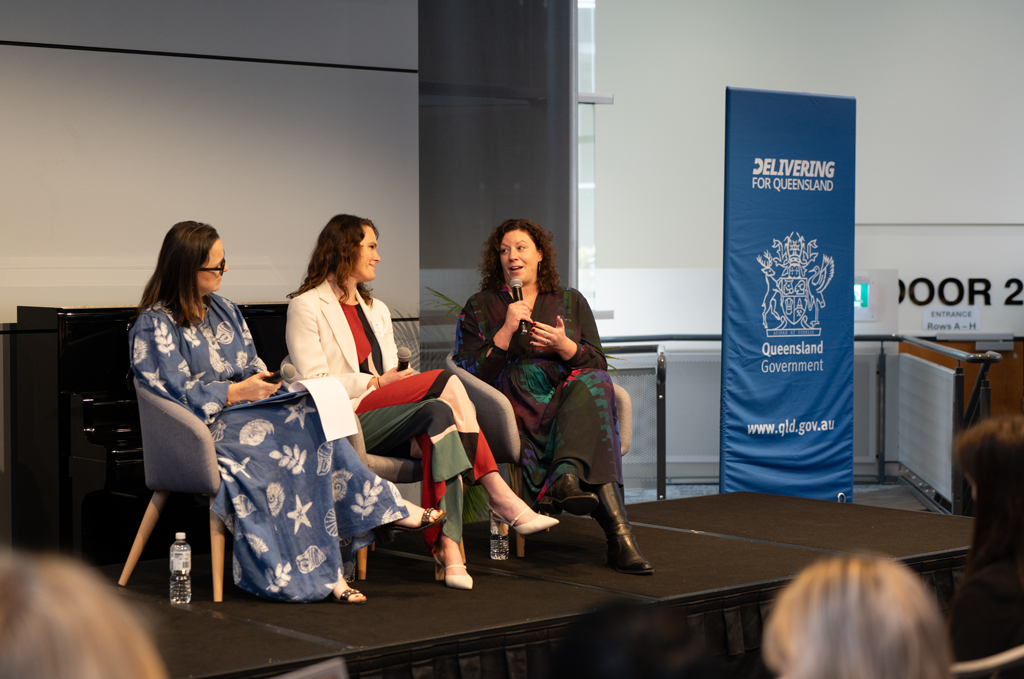
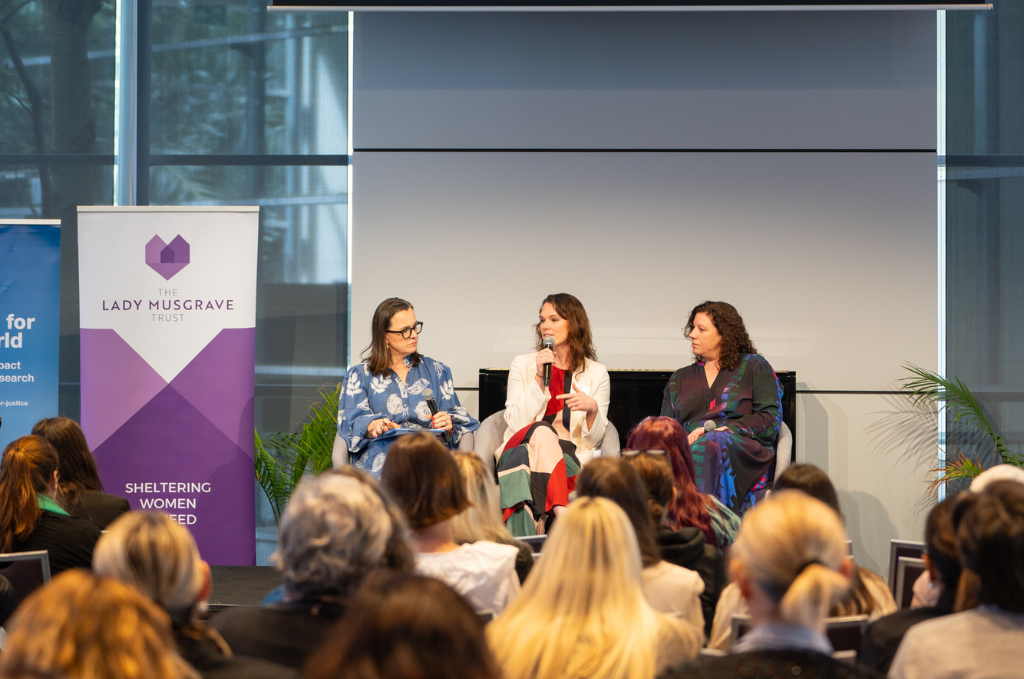
At the 2025 Annual Forum on Women and Homelessness, one message rang clear: we need to rethink housing through a gendered lens. The Climbing Together: State-by-State Insights and Innovations for Women’s Housing panel explored the systemic gaps in housing for women – and the solutions already underway.
“This is a system that already has a gender lens – it’s just a male one,” said Laura Mahoney, Acting CEO of Launch Housing.
ABC’s Rachel Mealey facilitated a thought-provoking conversation with Laura and Dr Kate Raynor, Director of the Centre for Equitable Housing at Per Capita Victoria. Together, they shared how to translate research to reality and what a gendered response to housing looks like in practice.
At Launch Housing, Laura has been involved in the development of two successful Melbourne-based social housing programs targeting women at risk of homelessness. The Cornelia Program provides transitional housing for young women and their babies, with wrap-around prenatal and postnatal care. Viv’s Place, meanwhile, provides permanent accommodation for at-risk women and children.
“We know the system wasn’t built with women in mind – but that doesn’t mean we can’t change it,” said Laura. “We’re showing what’s possible when you start with the needs of women and children and design from there.”
According to Kate, just over half of all people accessing social housing are women – and that figure rises to 60% for specialist homelessness services. In Queensland alone, around 10,000 women are homeless at any given time.
This overrepresentation points to poorer long-term outcomes for women in general – the result of a stretched system that was never designed for women.
“Women are more likely to die or sustain significant injuries in car crashes. That’s because, over time, we tested seat belts on male bodies, not female bodies,” Kate said. “It’s just not designed with women in mind, and the same is true of housing. We know that housing outcomes are different for women.”
Gender-informed housing models, like those developed by Launch Housing and The Lady Musgrave Trust, are built from the ground up to accommodate women and children. This means considering their needs from the beginning – for example, installing bathtubs in every bathroom for bathing children, or designing spaces that are accessible for prams.
“When we talk about applying a gender lens to housing, we’re talking about the idea that people experience outcomes of programs and issues in different ways depending on their attributes. One of those attributes is gender,” Kate said.
“Generally, I’d say applying a gender lens improves the rigor of your analysis – and that improves the impact or the targeting of your program.”
What a gendered lens looks like in action
Located in Melbourne, Viv’s Place is the first permanent supportive housing project of its kind in Australia, purpose-built to support women and children escaping domestic and family violence. It houses up to 60 women and 200 children, with every element designed through a gender-informed lens.
From the outset, Launch Housing sought input from women and children to inform the design. As a result, Viv’s Place looks a little different to standard social housing.
“This is what a gendered approach to housing looks like on the ground,” Laura said. “All the apartments have washing machines – we don’t expect people to use communal washing machines. We have pram parking and outdoor spaces for kids to play in, plus safe, secure spaces for their bikes and scooters.”
The team behind Viv’s Place had to be flexible and continually adjust to tenant feedback. Thanks to its safe, stable setting, more older children than anticipated chose to reunite with mothers living at Viv’s Place.
“We didn’t realise how much family reunification we’d get. Next time, we’d have a basketball hoop and more flexible outdoor spaces.”
Safety is also a central feature. In every state in Australia, the leading cause of homelessness for women and children is domestic and family violence. A third of Viv’s Place residents are protected by active intervention orders (IVOs), and resident safety has been prioritised at every level.
Onsite resident engagement officers support women, manage visitors and help create a sense of community.
“Managing visitor entry and how people work in that space has been an ongoing learning process,” Laura said. “Because it’s the first time we’ve done this, some of the things we did early on are different now.”
How language shapes housing policy
As Australia’s housing system strains under pressure, both Laura and Kate emphasised the power of language to shift policy conversations, and ultimately, outcomes.
“Usually, we talk about the number of dwellings rather than the number of people housed,” said Laura. “I could say we’ve got a 60-apartment building in Dandenong, or I could say we’re housing 200 people in Dandenong. The language that we use to talk about the data can shift the policy conversation.”
Kate agreed: a more humane, compassionate approach to housing starts with the words we choose. Relaying data without context can also lead to confusion and misunderstanding.
“In Victoria, we’re seeing a lot of older, three-or-four-bedroom developments being knocked down and replaced with one-bedroom apartments. So there’s a small uplift in the number of units we’re providing, but there’s actually a reduction in the number of people being housed.”
With more families navigating multigenerational care, rising youth homelessness and the pressures of single parenting, smaller units aren’t always the answer.
“A one-bedroom apartment might be appropriate at one point in time, but it doesn’t provide a lot of flexibility for people doing kinship care,” said Kate. “We can build at scale while also thinking about the humanity of these systems, if that’s in conflict – and that’s really important to tease apart.”
For vulnerable individuals, physical shelter isn’t the only need. Community, belonging and flexibility matter too.
“Language matters,” Kate said. “It really does.”
Funding the solution
Organisations like The Lady Musgrave Trust and Launch Housing remain committed to providing safe housing for women and children at risk of homelessness. But in a sector dependent on philanthropy and government grants, resourcing even mainstream programs is a challenge – let alone those deemed ‘specialised’.
Programs like Viv’s Place are rare. Their success reflects not just strategy, but persistence.
“A lot of patience and a huge amount of resilience,” Laura said.
“When you’re trying to fund programs that are innovative or different, the programs need to be linked to place – to whatever that particular community needs,” Laura told the panel. “There are a lot of funders within communities. For example, we work in Ballarat and the Ballarat Community Foundation is a huge part of helping build a solution for that individual community.”
While local roots are critical, national collaboration is just as important. Housing is a national issue, and with plenty of teamwork, sector workers can coordinate a national response.
“The other end of the scale is the national advocacy and the statewide advocacy,” Laura said. “You have every service sector working together acknowledging that this is a thing we need to do, and that investment needs to be targeted.
“The more voices that you can bring together, the more chance you have of changing things.”
Collaborating for change
Service providers, experts and sector workers are already working to stitch together solutions, sharing lived experiences, data, ideas and models that work.
“If you look across all the states and across the country, we have so many good things that are happening – so many pilot programs,” Laura said.
“I think there’s more we could do to start supporting each other and bringing those communities of practice together. Because the more we scale up, the more likely we are to implement across the entire country and share what we know.
“These programs shouldn’t be pilots. They should be the mainstream.”